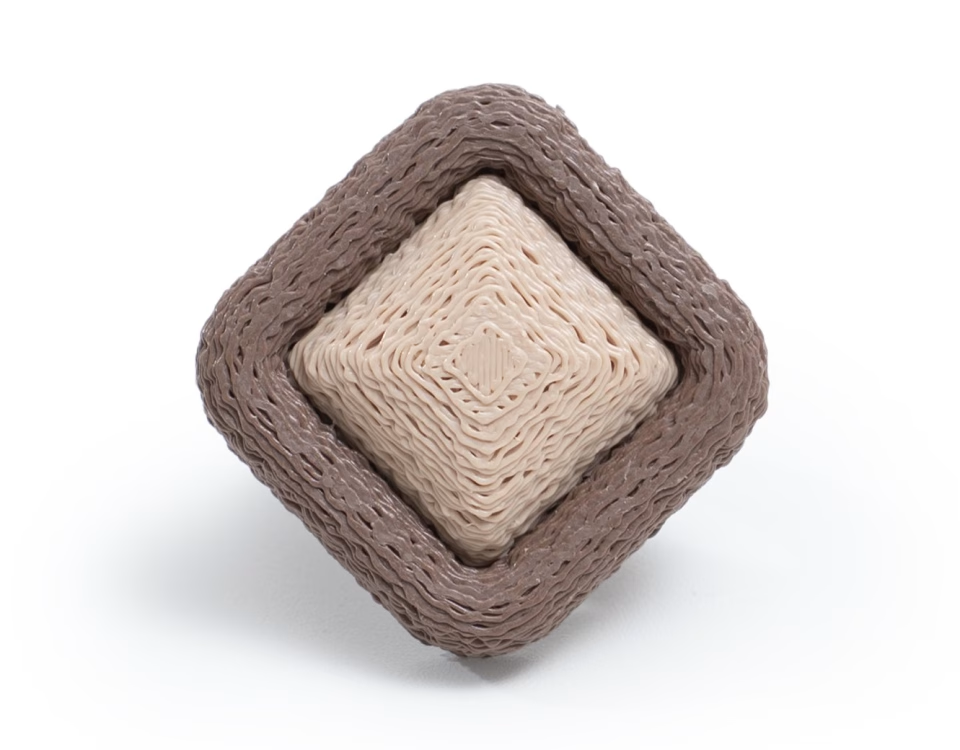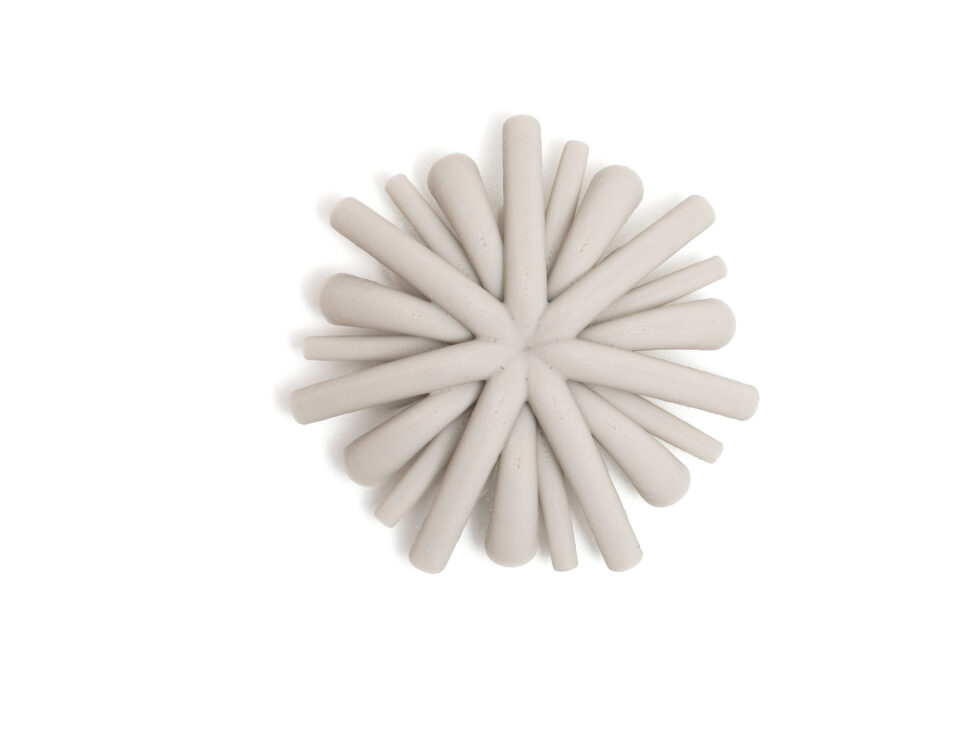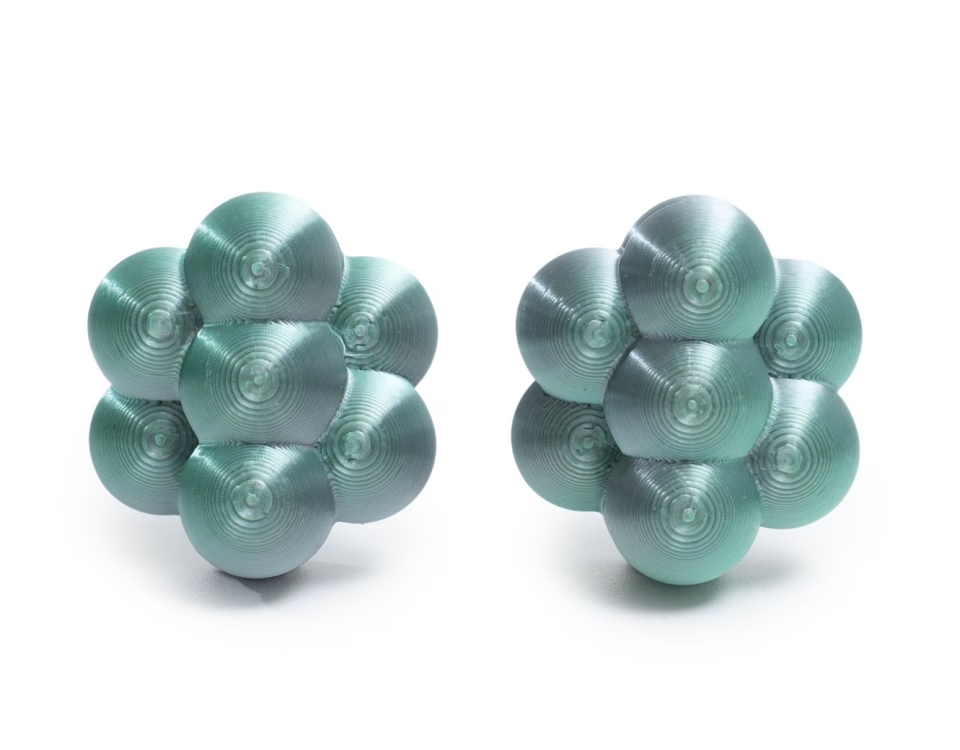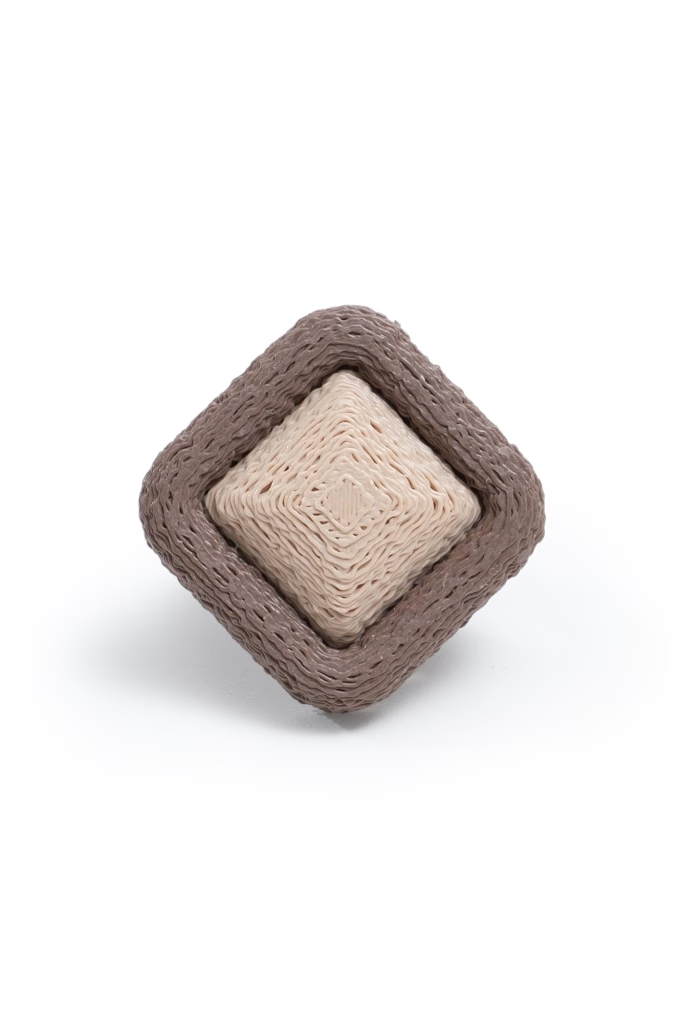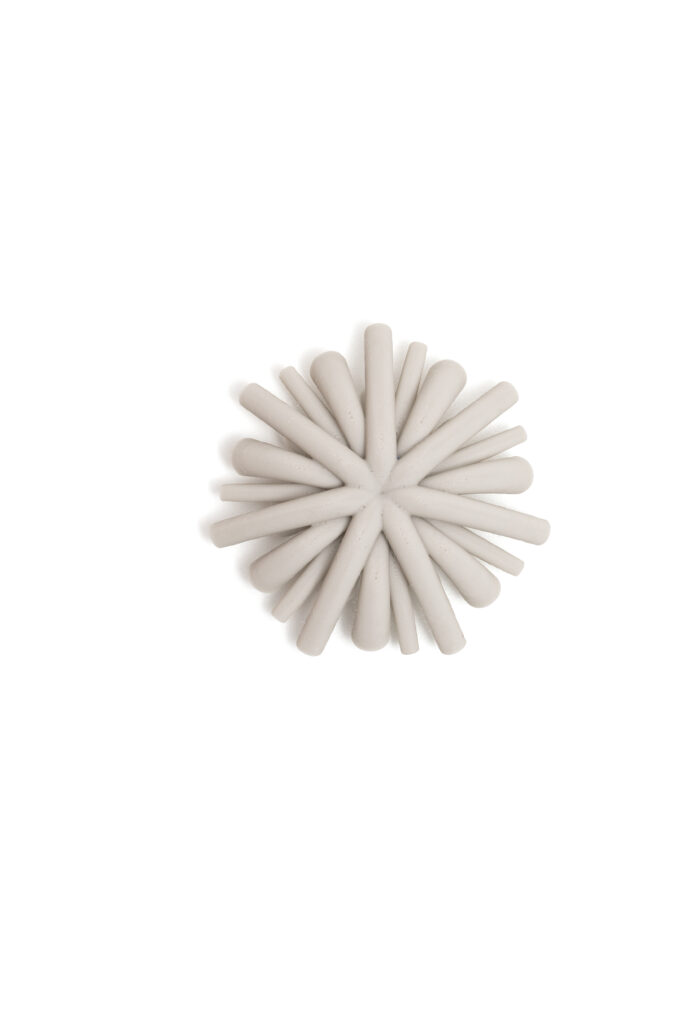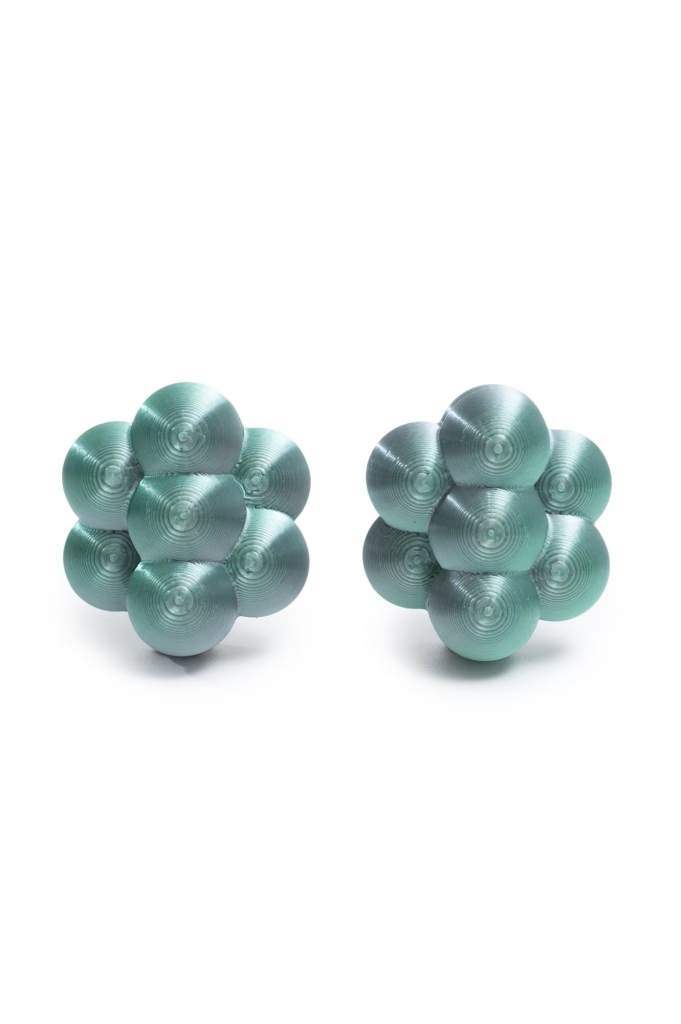
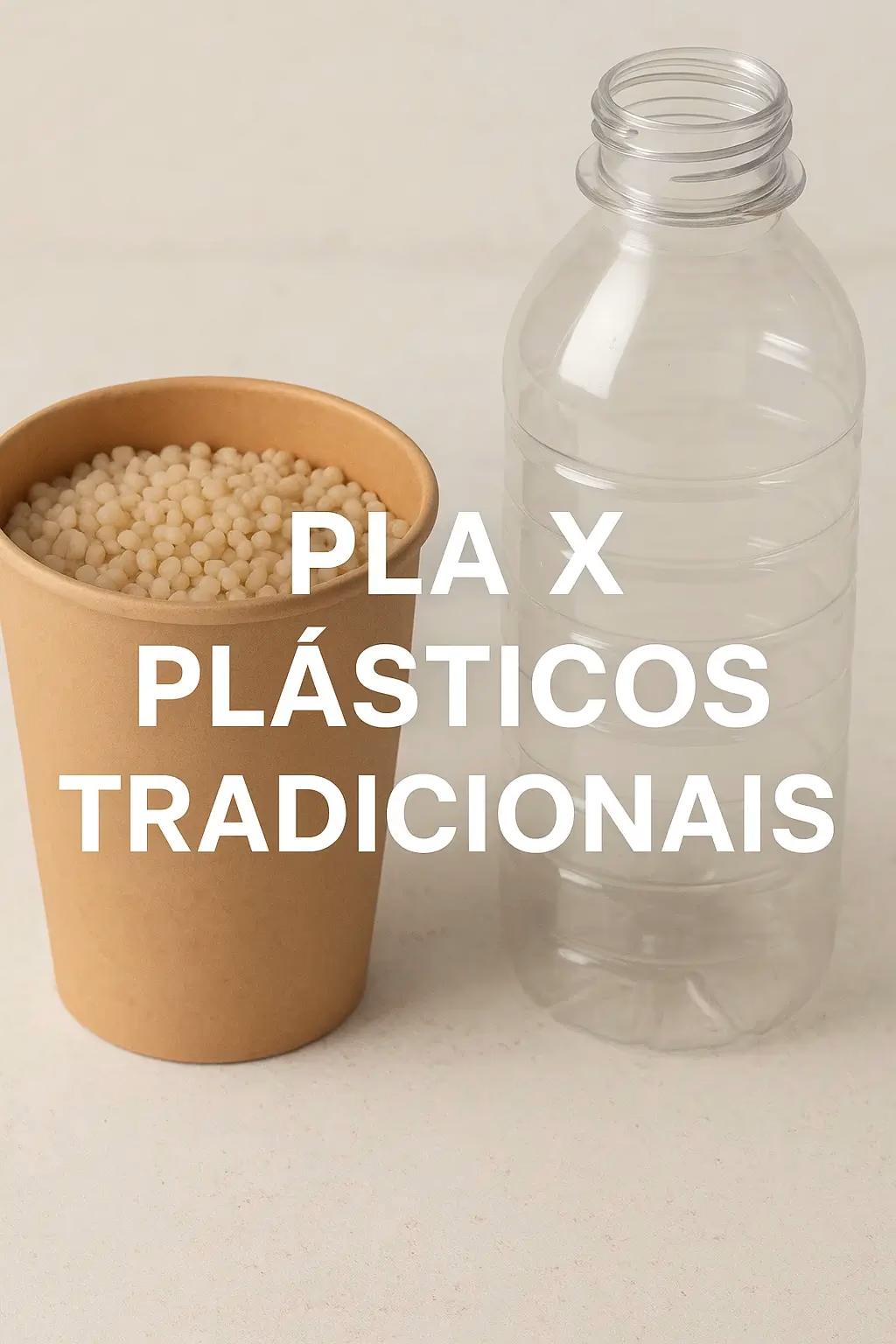
Renewable-source PLA is a polymer made from plants — corn, sugarcane, cassava or beet — rather than petroleum. It is compostable in industrial conditions, takes less energy to produce and has a substantially lower carbon footprint than conventional plastics. At KUBOLAB, every piece is made exclusively in this material, by precision 3D printing.
This isn’t a marketing decision. It has been the basis of the process from the start — and a position on how a design studio wants to exist in the world, without giving up on form.
What PLA is and where it comes from
PLA stands for polylactic acid — a thermoplastic polymer derived from plant sources. Unlike conventional plastics, synthesised from petroleum, PLA starts with photosynthesis: plants that capture CO₂ from the atmosphere as they grow and convert it into biomass.
That means the carbon in PLA was taken from the atmosphere recently — not extracted from fossil deposits formed over millions of years. From the point of view of the carbon cycle, that difference is substantial.
The plant material is refined into lactic acid and then into polymer pellets, which can be made into filament and processed by fused-deposition (FDM) 3D printers. The result is a rigid, precise material with excellent surface definition — ideal for complex geometries and sculptural forms.
PLA vs conventional plastics: a direct comparison
Both are technically plastics. But their impact is completely different — and the difference isn’t only in the origin, it runs through the whole chain.
| Renewable-source PLA | Petroleum plastics (PET, PP, PVC) | |
|---|---|---|
| Raw material | Cultivable plants, renewable on a human timescale | Oil and natural gas — finite resources |
| Extraction | Agricultural | Intensive extraction and chemical refining, with emissions at every stage |
| Processing energy | Lower extrusion temperatures, lower consumption | High energy consumption |
| End of life | Compostable in an industrial facility | Up to 400 years to break down; fragments into microplastics |
| Actual recycling | Recyclable in specific facilities | Less than 10% is actually recycled worldwide |
There’s also a difference that comes from the process, not the material: 3D printing builds the piece layer by layer, exactly where material is needed. No injection into a mould, no offcuts, no production scrap. For a studio that makes to order, that efficiency is part of the design.
Is PLA biodegradable? The correct answer
Here it’s important to be precise — and honest.
PLA is compostable, not biodegradable in the popular sense of the word. The difference matters. To break down in a reasonable time, PLA needs specific conditions of temperature (above 58 °C) and controlled humidity, found only in specialised industrial composting facilities. In ordinary landfill or in the environment, it degrades very slowly, like any other plastic.
That’s why KUBOLAB never uses the word biodegradable. Out of context, it creates a false impression. What we say precisely is: renewable-source PLA — a material whose raw material comes from plant cycles, not fossil fuels, and whose carbon footprint is substantially lower.
It isn’t perfect. It’s significantly better.
Is PLA safe to wear on the body?
Yes. PLA is non-toxic and BPA-free. It’s the same material used in food packaging and in medical devices — including absorbable sutures and implants, precisely because the body tolerates it well.
In earrings, the point of prolonged contact with the skin isn’t the PLA but the post. On KUBOLAB pieces the post is stainless steel, specified to our supplier as anti-allergy.
Strength and lightness: what PLA delivers in practice
The most frequent question is about durability. Does PLA seem fragile? The practical answer is: no, when it’s well designed. The material’s real limits — heat, concentrated pressure and falls — are covered in detail in does 3D-printed jewellery break?
The pieces are designed with the material’s mechanical properties in mind — geometries that spread stress, calculated thicknesses, and the understanding that design and material have to work together. That applies to structure as much as to weight.
And it’s in weight that the difference shows most concretely. PLA has a density of around 1.24 g/cm³. Silver, 10.5 g/cm³. The same volume weighs about eight times as much in silver — and that’s what makes a truly sculptural piece viable, with presence and volume, that you can still wear all day.
The real numbers for KUBOLAB pieces, by category (the full chart, piece by piece, is here):
- Earrings: from 1.5 g to 4.9 g each — see the earrings
- Rings: from 5.2 g to 13.4 g — see the rings
- Brooches: from 13 g to 22.5 g — see the brooches
- Necklaces: from 45 g to 171 g, clasp included — see the necklaces
It’s in the larger pieces that this changes the experience of wearing them most. A volumetric necklace like the Kubos Necklace weighs 45 g. The same volume in metal would be in the region of several hundred grams — and simply wouldn’t be wearable.
Why KUBOLAB chose renewable-source PLA
The choice wasn’t only technical. It was a design choice.
PLA allows geometries that would be impossible in casting or conventional cutting. It lets a piece be built with the complexity the design demands — not the complexity the process allows. In the studio, the material doesn’t limit the form. The form dictates how the material is used.
On top of that, making to order with 3D printing eliminates idle stock, production scrap and the more is cheaper logic that dominates the fashion industry. Every piece exists because someone ordered it. We produce exactly what’s needed — no more, no less.
That combination — renewable material, additive process, made-to-order production — is the foundation every piece is built on. Not as a sales argument. As design practice.
To see the pieces that come out of this process, visit the shop. Every ring, earring, brooch and necklace available is made with the same material and the same commitment to form.