
In normal use, no. Well-designed PLA is rigid and handles everyday wear with room to spare — and, unlike metal, it doesn’t oxidise, rust or lose its colour. What breaks a 3D-printed piece isn’t wearing it: it’s a fall onto a hard floor landing on a thin element, pressure concentrated on one point, and heat above 55 °C.
This is the question that most often holds people back from buying 3D-printed jewellery, and it’s a fair one. It deserves a precise answer, including where the material’s real limits are — because knowing where the limit is, is what makes a piece last for years.
What PLA can handle
The first surprise when someone receives a piece is how light it is. The second, when they squeeze it, is how rigid it is. Well-processed renewable-source PLA is a hard thermoplastic, not a flexible plastic — it doesn’t give, dent or deform under your fingers.
And there is a list of things that simply don’t happen to it, which do happen to metal:
- It doesn’t oxidise or tarnish. There’s no polishing a KUBOLAB piece to bring back its shine, because it never loses it.
- It doesn’t rust from sweat, rain or the sea. Water isn’t a problem.
- It doesn’t lose colour under normal exposure to artificial light. The colour is in the material, not in a coating applied on top that could peel.
- It doesn’t lose stones, because there are no settings.
Strength also comes from the design, not just the material: calculated thickness, geometry that spreads stress instead of concentrating it, and a layer height chosen piece by piece — between 0.12 mm and 0.24 mm — with internal infill from 40% to 100% depending on the load the piece has to bear.
The three real limits
1. Heat above 55 °C
This is the most important limit and the least intuitive. PLA starts to soften between 55 °C and 65 °C. In practice the piece doesn’t melt — it deforms if it is under pressure at that temperature.
Where this actually happens: inside a closed car in the sun, which easily goes over 60 °C on a summer day in São Paulo; on a windowsill in direct sun for hours; near a hairdryer, an oven or a hob.
Where it doesn’t happen: on the body. Worn indoors, a piece never gets anywhere near that. The beach and the pool aren’t a problem either — the risk isn’t the heat of the day, it’s the parked car.
2. Pressure concentrated on one point
PLA handles distributed compression well and localised pressure on thin geometry badly. Sitting on a piece, storing it with weight on top for weeks, or forcing a bend can fracture a slender element.
It’s the difference between squeezing a piece in your closed hand — which it can take — and resting your whole body weight on a single spike.
3. A fall onto a hard floor
The honest answer here is: it depends on the geometry and the height. A 1.5 m drop onto porcelain tiles is not the same as a drop onto a bed.
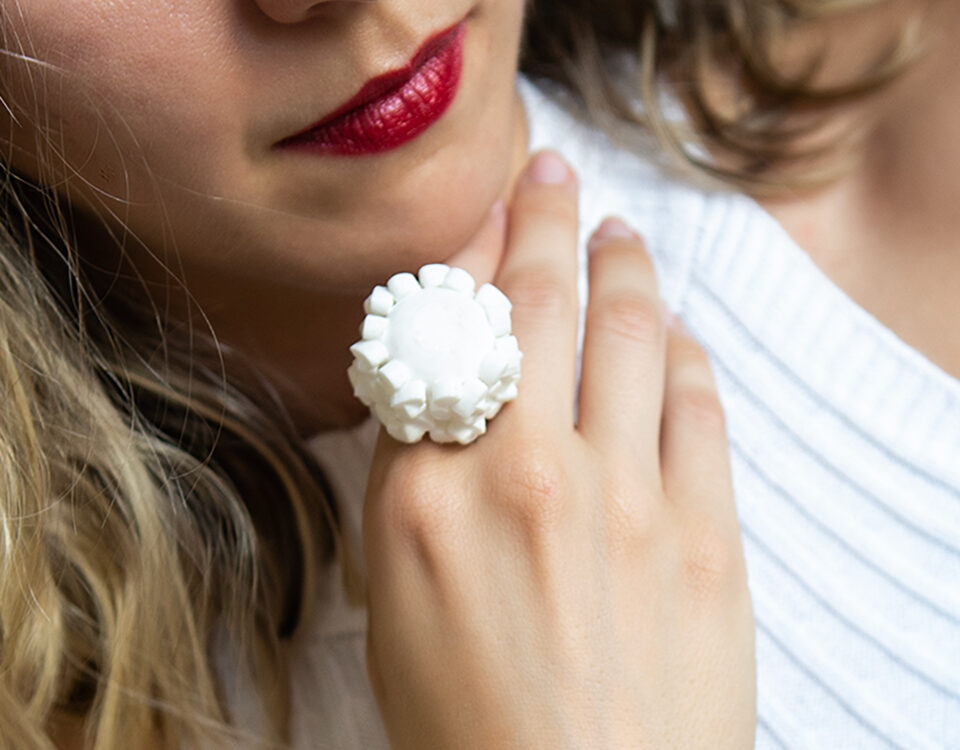
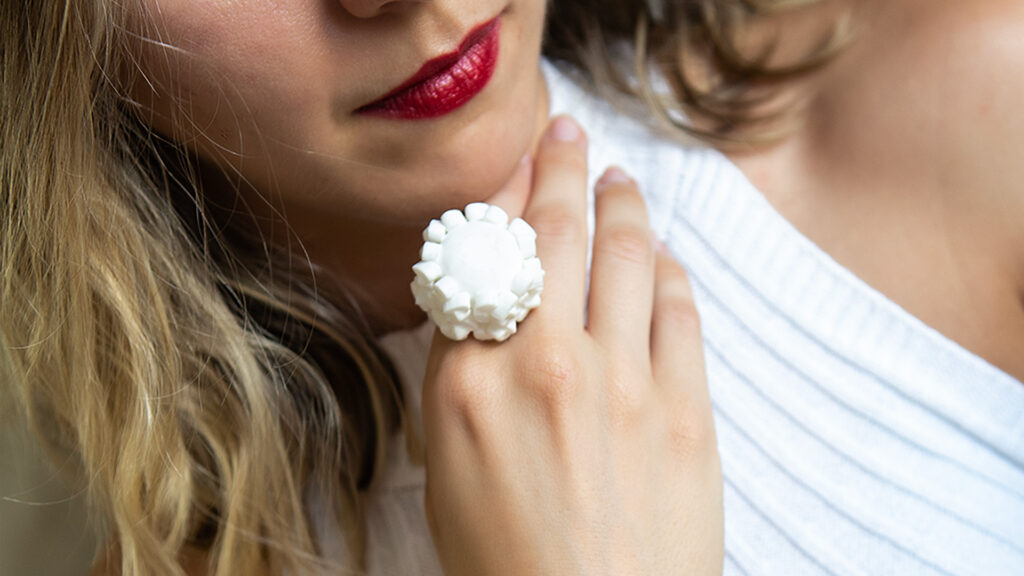
Pieces with very thin elements are the most vulnerable — the spikes of the Radia Brooch, the extensions of the Meduza Brooch. Compact forms, like most of the rings, cope much better. Remember that a PLA ring can’t be resized afterwards — the right size is chosen when you buy.
Why a light piece suffers less in a fall
There’s a detail in the material’s favour that usually goes unnoticed: the energy of an impact grows with mass. A 2 g piece falling from a metre reaches the floor with a fraction of the energy of a piece of the same volume in silver, which would weigh about eight times as much.
PLA has a density of about 1.24 g/cm³, against 10.5 for silver. Less mass, less energy on impact. It isn’t immune — it’s punished less than intuition suggests. The real weight of every piece is published, if you want to do the maths.
Where the pieces are assembled — and whether that comes apart
No piece is sanded, polished or painted: it comes off the machine as it was designed, the supports are removed and it is assembled. The assembly is what usually raises questions:
- Ring: two parts, glued.
- Brooch: four parts, with four magnets on each side of the fabric. Nothing pierces your clothes.
- Necklace: the printed piece plus the clasp.
The joins are not a weak point in normal use. What needs attention with the brooches is something else: they use neodymium magnets, and anyone with a pacemaker or defibrillator should not wear a piece with magnets.
The visible layer is not a crack
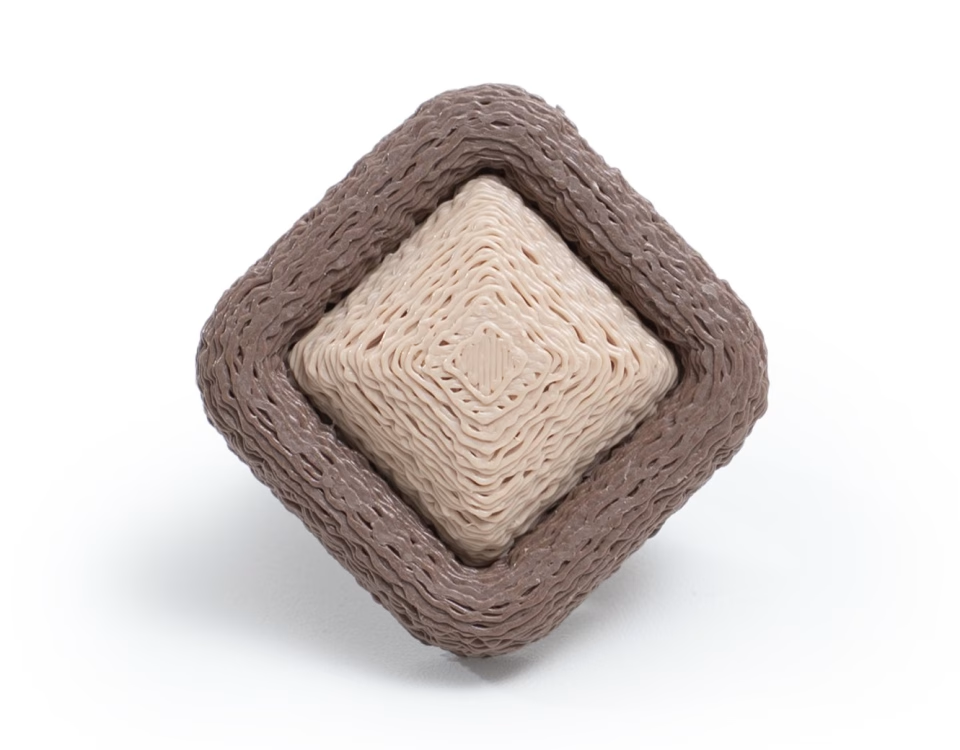
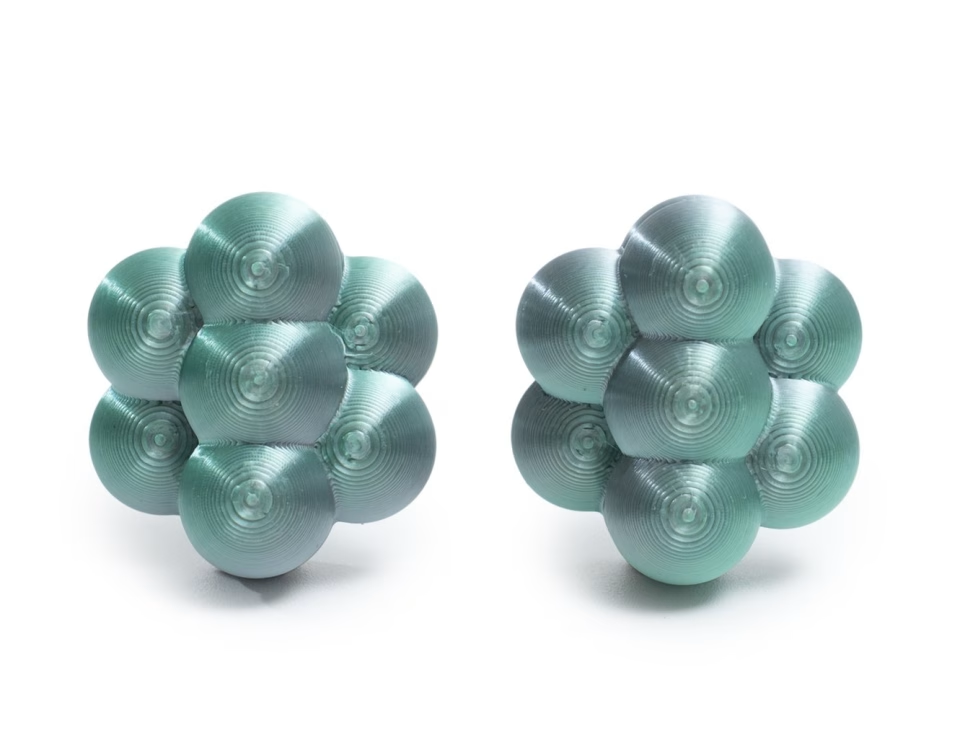
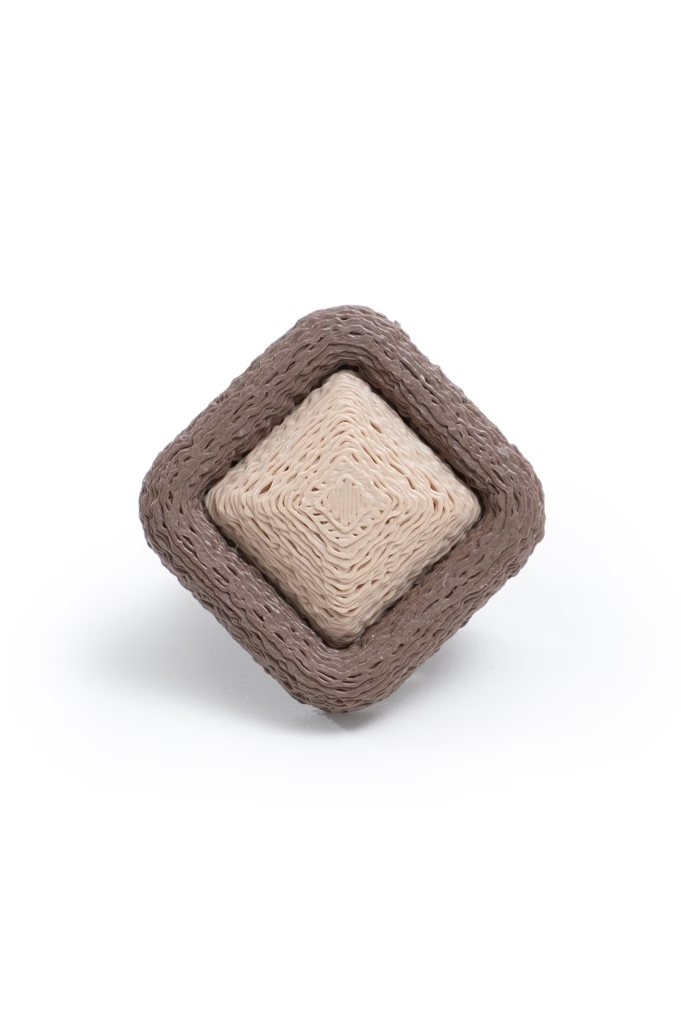
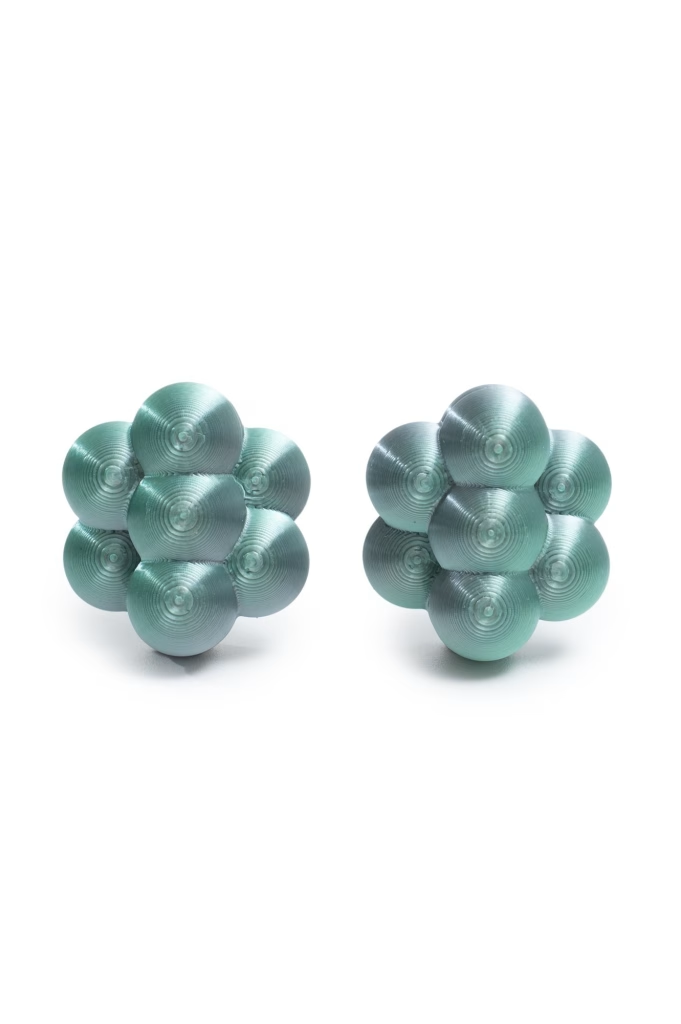
Worth saying, because it can cause a scare: the lines you see on the surface are the print layers, and they are a design decision — on some pieces the layer is thick so it reads as texture, on others it is fine so it almost disappears.
It isn’t a crack, it isn’t an unfinished surface and it doesn’t peel. It’s how the piece is made, and it’s what the piece has to show.
What to avoid
A few things, all of them specific: acetone and high-strength alcohol over long periods attack the surface; so do harsh and abrasive cleaning products. Occasional contact with perfume, sunscreen and hand cream does no harm.
To clean: a dry or slightly damp cloth. The full details are in the wear and care guide.
So how long does it last?
Pieces worn regularly in normal conditions show no noticeable degradation over years. PLA is stable at room temperature — it doesn’t age on its own in a drawer.
What ends the life of a PLA piece is almost always mechanical damage — a fall or pressure — and almost never wear of the material. That’s an important distinction: it means durability lies more in your hands than in the material.
And if it breaks?
Two different situations, and it’s worth being clear about which is which.
Manufacturing defect: up to 30 calendar days after delivery. Just report it with a photo or video to studio@kubolab.com.br. The piece is assessed and you get an answer within 10 business days; if the defect is confirmed, it is replaced or fully refunded, with shipping paid by KUBOLAB.
Changed your mind: 7 calendar days from delivery, with the piece unused in its original packaging. We pay the return shipping.
To be honest about the other case too: a piece that fell on a porcelain floor is not a manufacturing defect. If it happens, write to us anyway — each piece is made one by one, to order, and it’s worth a conversation. The full terms are in the returns and refunds policy.
See the pieces: earrings, rings, brooches, necklaces, or everything in the shop.