Measure the circumference of your finger with a strip of paper and subtract 40: the result is your ring size. A finger with a 56 mm circumference is size 16. KUBOLAB rings go from size 12 to 24 on the Brazilian scale — roughly US 6 to 10¾. And if you get it wrong, the new piece for the first exchange is on us.
That last part exists for a technical reason worth explaining, because it changes how you should choose: a 3D-printed ring can’t be adjusted afterwards.
How to measure at home with a strip of paper
You need paper, scissors, a pen and a ruler with millimetres.
- Cut a strip of paper about 1 cm wide and 10 cm long.
- Wrap it around the finger you’ll wear the ring on, at the base, without tightening — it should slide, not mark the skin.
- Slide the strip over the knuckle to check. If it won’t go over the joint, it’s too tight. This is the most common mistake: the right measurement is the one that passes over the knuckle, not the one that fits snugly at the base.
- Mark with the pen where the strip meets itself.
- Unroll it and measure from the end to the mark, in millimetres.
- Subtract 40. That’s your size.
Example: 57 mm measured − 40 = size 17.
Size, circumference and diameter chart
Brazilian sizing is straightforward: the size is the inside circumference in millimetres minus 40. The diameter is for anyone measuring a ring they already have. The US column is an approximate equivalent.
| Size (BR) | Inside circumference | Inside diameter | US (approx.) |
|---|---|---|---|
| 12 | 52 mm | 16.6 mm | 6 |
| 13 | 53 mm | 16.9 mm | 6½ |
| 14 | 54 mm | 17.2 mm | 6¾ |
| 15 | 55 mm | 17.5 mm | 7¼ |
| 16 | 56 mm | 17.8 mm | 7½ |
| 17 | 57 mm | 18.1 mm | 8 |
| 18 | 58 mm | 18.5 mm | 8½ |
| 19 | 59 mm | 18.8 mm | 8¾ |
| 20 | 60 mm | 19.1 mm | 9¼ |
| 21 | 61 mm | 19.4 mm | 9½ |
| 22 | 62 mm | 19.7 mm | 10 |
| 23 | 63 mm | 20.1 mm | 10½ |
| 24 | 64 mm | 20.4 mm | 10¾ |
If you already have a ring that fits
This is the most reliable method, because it removes the question of how tight you pulled. Measure the inside diameter — from one inner edge to the other, through the centre — with a ruler, and find the closest value in the diameter column.
One thing to watch: measure a ring of a similar width to the one you’re buying. A wide ring behaves differently from a thin one on the same finger.
The time of day changes the measurement
A finger doesn’t have just one size. It swells with heat, salt, exercise, at the end of the day and on days of water retention. The difference can be a whole size.
- Measure in the late afternoon, with your body at a normal temperature — it’s the measurement closest to everyday wear.
- Don’t measure right after waking up, with cold hands, or after a workout.
- If you fall between two sizes, choose the larger one. A tight ring stays in the drawer; a slightly loose one gets worn.
A wide ring needs half a size more
The wider the band, the more surface touches the finger and the snugger it feels. That’s why the same person can wear a size 16 in a thin ring and need a 17 in a wide one.
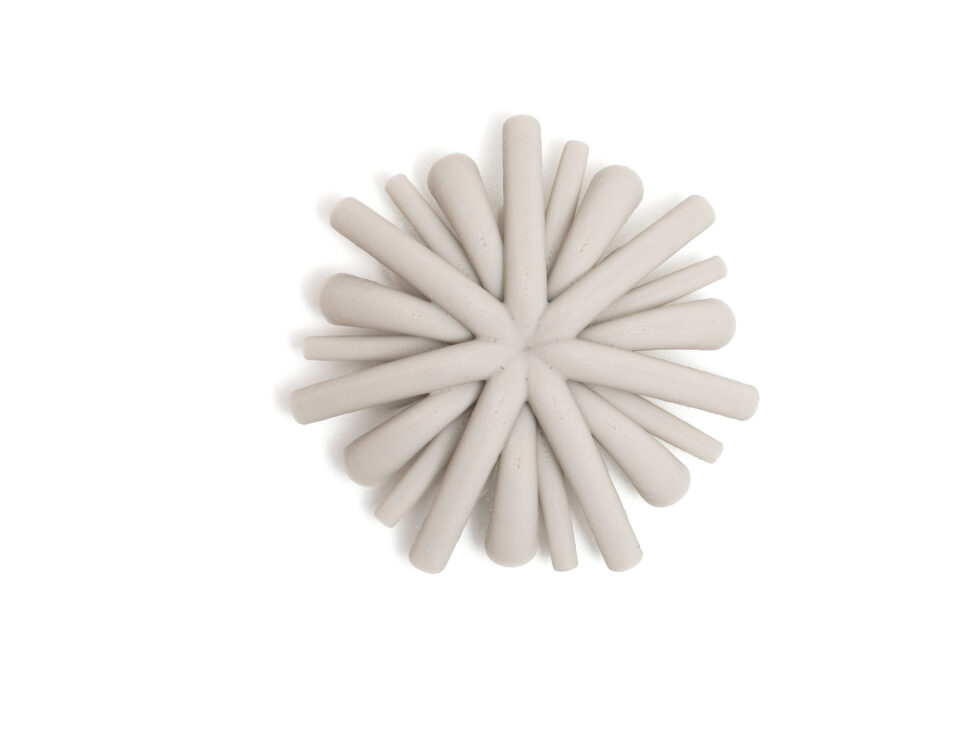
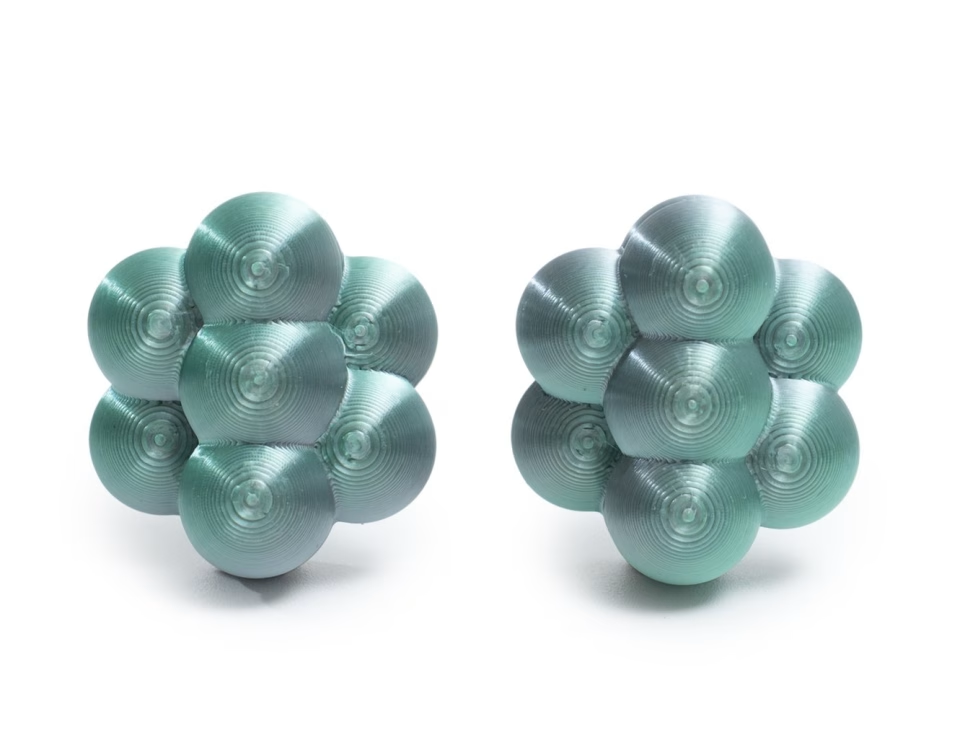
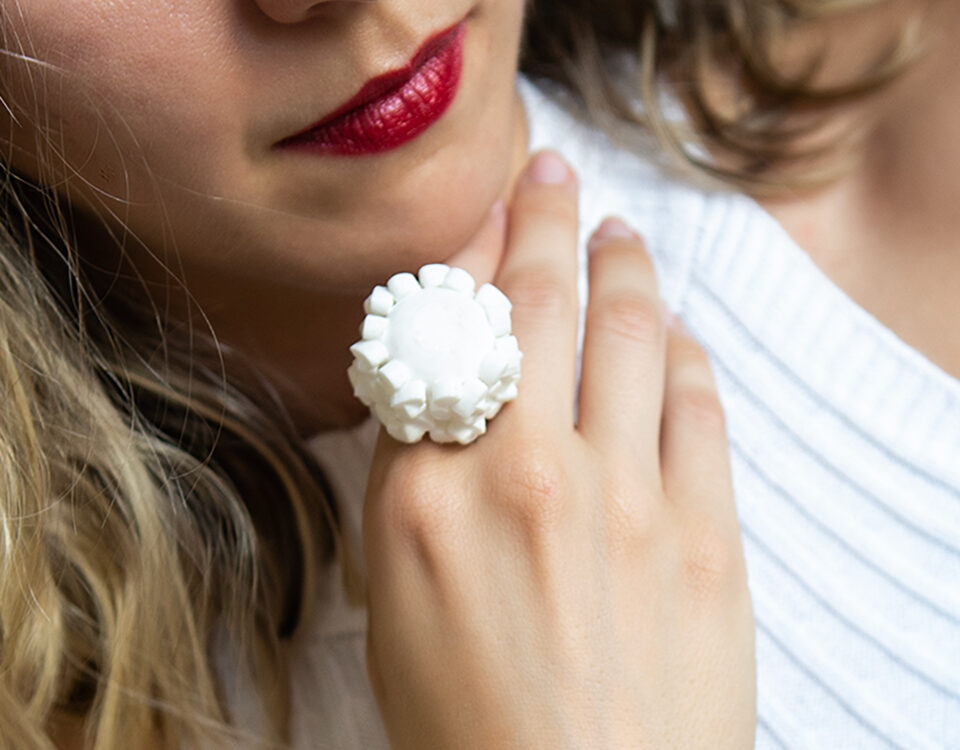
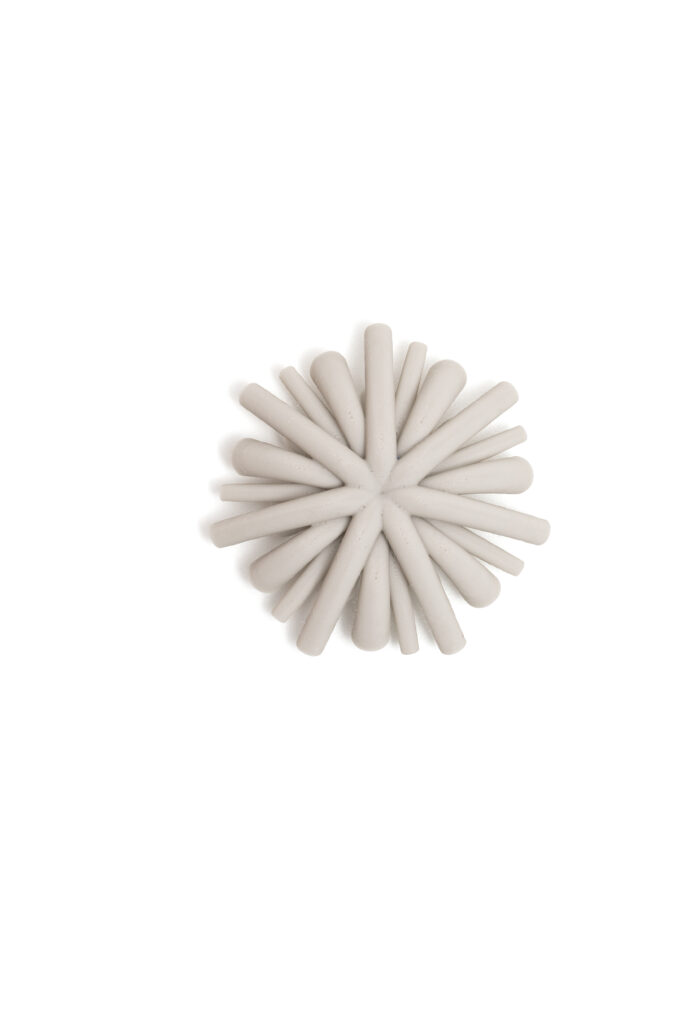
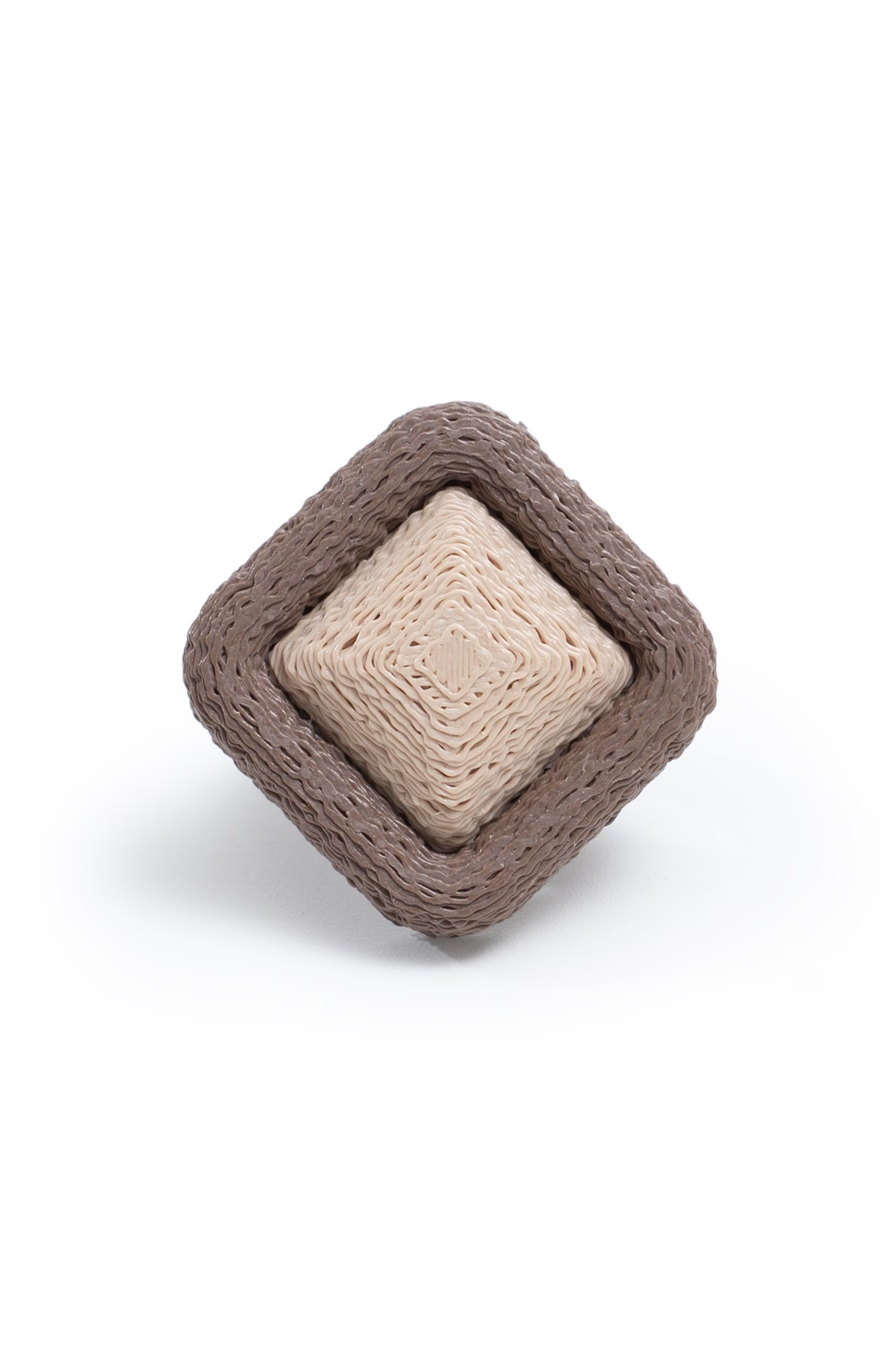
Among KUBOLAB pieces this applies, for example, to the Chocolate Ring, which has volume and a full band — if you’re on the edge between two sizes, go for the larger. With an open-structure ring like the Rendas Ring, your usual size tends to fit.
Why a 3D-printed ring can’t be resized
Here is the difference almost nobody explains, and it changes the buying decision.
A gold or silver ring can be adjusted by a jeweller: they cut, remove or add material, solder and polish. Metal can be reworked.
PLA can’t. The piece is built layer by layer from a digital model, and every size is a different file. There’s no opening and soldering: to change the size, the piece is printed again in the right size.
That has a good side — every size is a whole piece, with no seam and no solder point, and with geometry in proportion to the size instead of stretched. And it has a side that needs care: the measurement has to be right when you buy. Hence the policy below.
The first size exchange is free
If the ring arrives and doesn’t fit, the new piece for the first exchange is on us — printed in the right size, with no charge for the piece.
How it works:
- Deadline: up to 30 calendar days after delivery.
- Condition: the piece must be unused, as it arrived. A ring worn day to day can’t come back for a size exchange — and that’s fair both ways, because each piece is made one by one.
- Size only: there’s no exchange of design or colour. Same ring, same colour, different size.
- Shipping: sending the piece back to the studio is on you; sending the new piece is on us.
- Production: up to 7 business days after the original piece reaches us.
To request it, write to studio@kubolab.com.br with your order number and the size you need.
Separately from this policy, Brazil’s Consumer Protection Code gives you 7 calendar days to withdraw from an online purchase — in that case, with the return shipping paid by us. The full terms are in the returns and refunds policy.
Questions that usually come with it
Is the ring light? KUBOLAB rings weigh between 5.2 g and 13.4 g — the full weight chart lists every piece.
Does it break in everyday wear? Not in normal use; the rings are the most compact pieces in the collection and the ones that best withstand a fall. The real limits are in does 3D-printed jewellery break?
Can it get wet? Better not. Take the ring off to wash your hands, shower and swim, and keep it away from pools and the sea. PLA doesn’t oxidise or rust, but prolonged moisture isn’t good for the piece. And avoid heat above 55 °C, such as inside a closed car in the sun.
With your measurement in hand, the rings are here — or the full collection in the shop.