In 3D printing, the choice of material directly affects the quality, the aesthetics and the environmental impact of a piece.
The three best-known materials are PLA, PETG and resin, each with its own characteristics.
1. What is PLA?
PLA (polylactic acid) is a biopolymer made from renewable sources, such as corn and sugarcane. It is:
- compostable in industrial conditions
- light
- rigid
- safe
- eco-friendly
- ideal for geometric structures
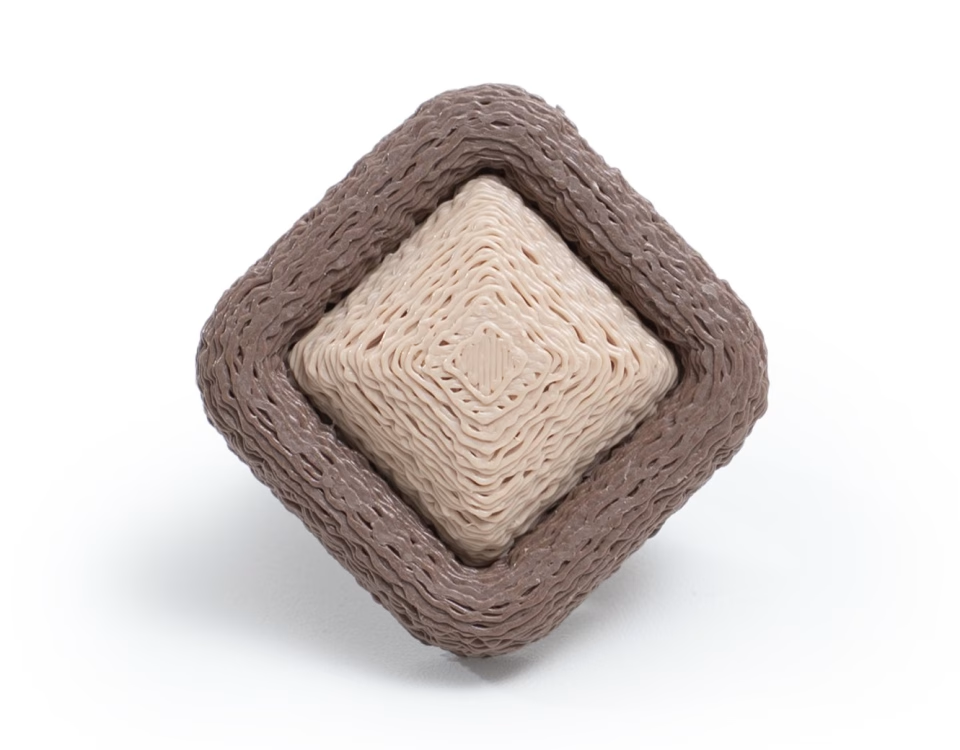
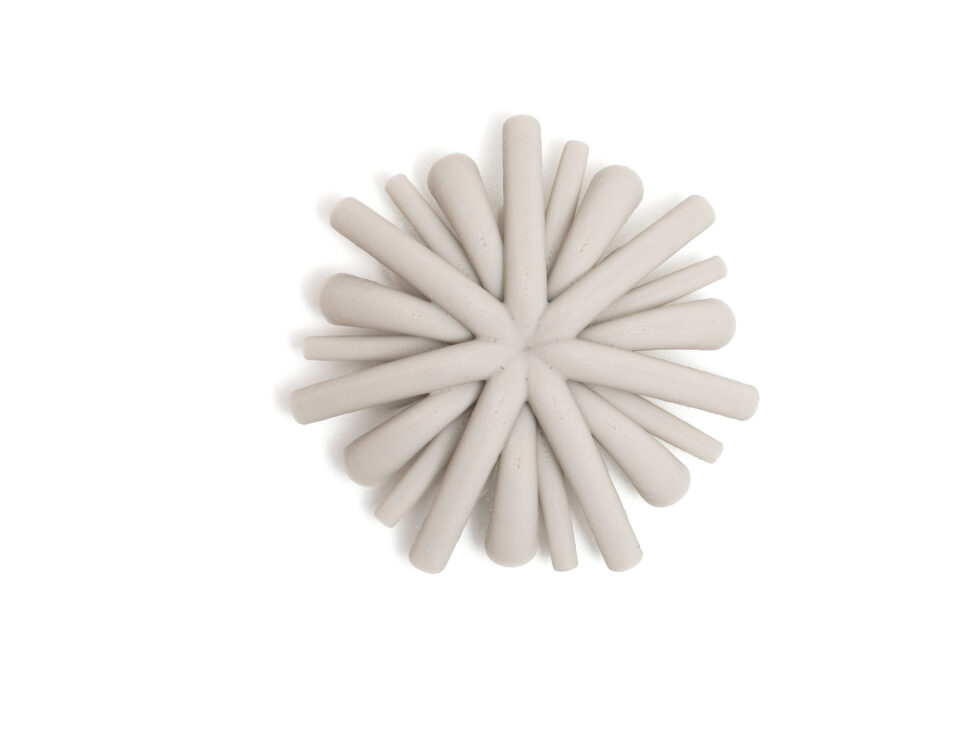
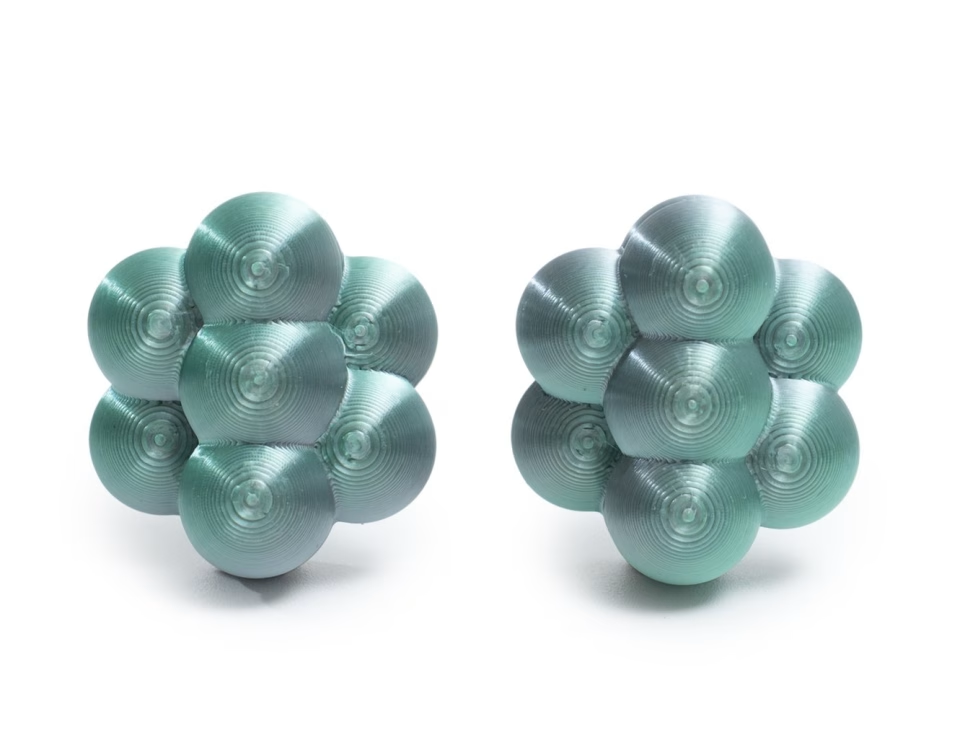
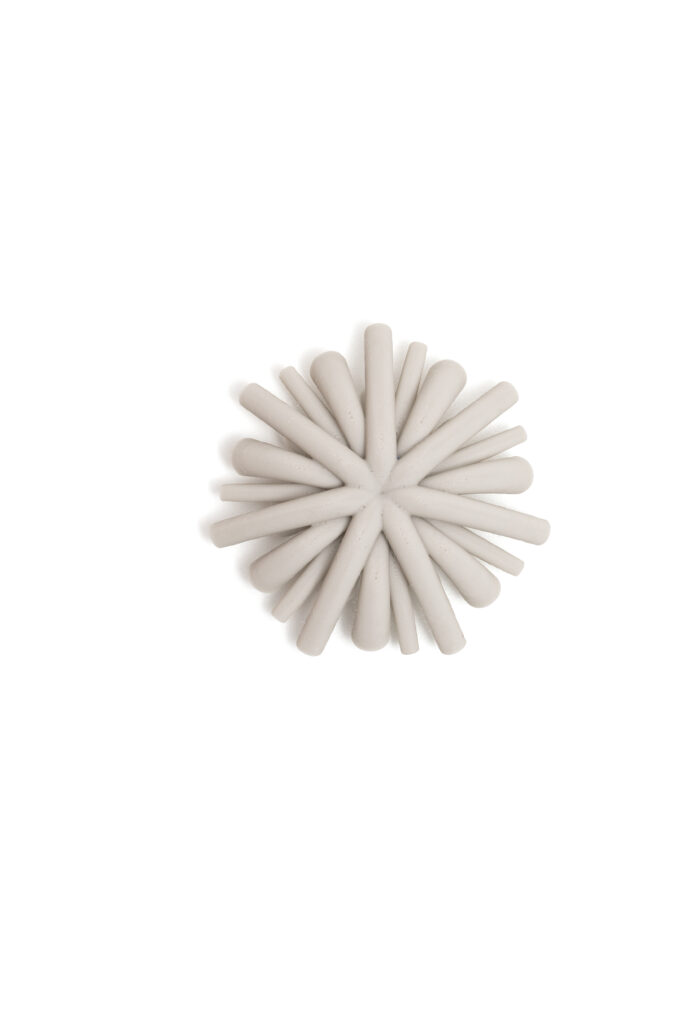
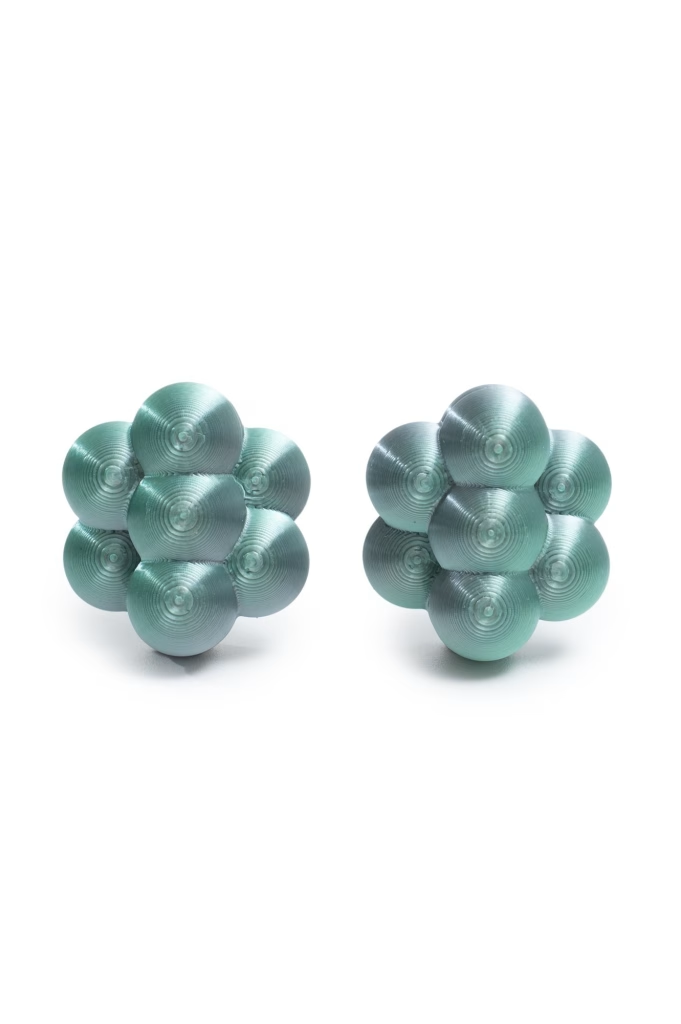
It’s KUBOLAB‘s main material, because it brings together aesthetics, lightness and sustainability. Find out in detail what renewable-source PLA is and why we don’t call the material biodegradable.
Best for:
modern accessories, light pieces, made-to-order production, sustainable design.
2. What is PETG?
PETG is derived from PET (the plastic used in bottles), with added glycol, which makes it:
- impact-resistant
- more flexible than PLA
- stable under heat
- durable
- not biodegradable
It’s widely used in mechanical and functional parts.
Best for:
items that need extra strength, technical parts, components exposed to impact or heat.
Not ideal for sustainable fashion accessories, because it isn’t biodegradable and has a greater environmental impact than PLA.
3. What is resin?
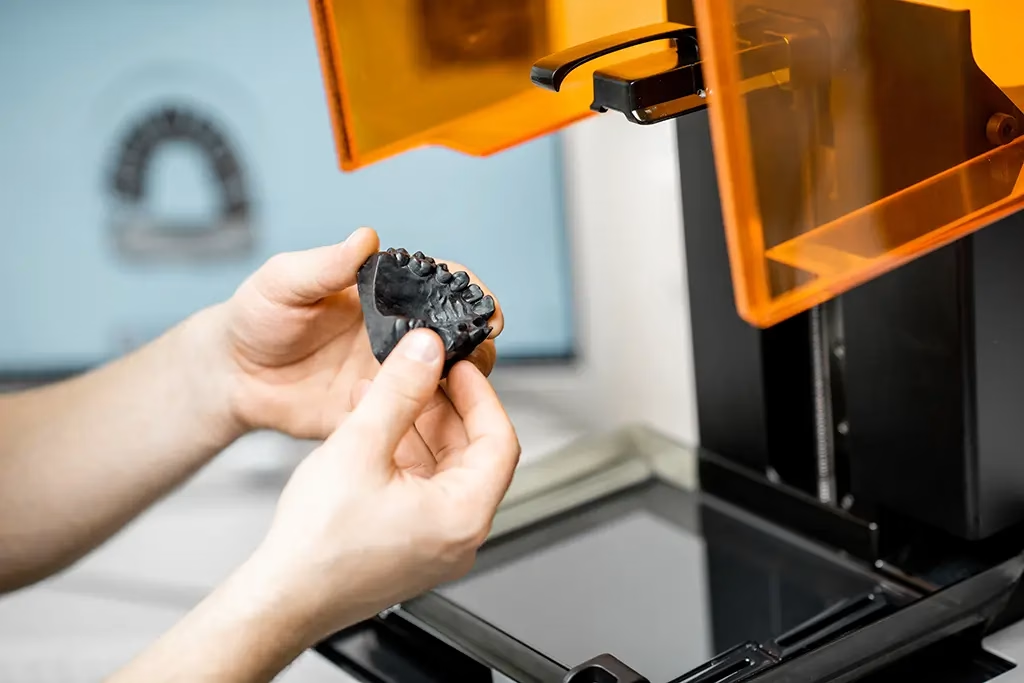
The resin used in 3D printing (SLA or DLP) is liquid and hardens under UV light.
Its main characteristics:
- very high precision
- extremely fine detail
- a very smooth finish
- rich in texture and aesthetics
- but toxic and not sustainable
- higher cost
- produces chemical waste
Resin can also be brittle, depending on the formulation.
Best for:
high-precision prototypes, miniatures, jewellery with very fine detail (before going to traditional casting), pieces that demand a flawless finish.
Not recommended for accessories worn directly on the skin, unless it goes through rigorous curing, washing and sealing — and it doesn’t meet sustainability criteria either.
A simple comparison
| Material | Sustainable? | Strength | Flexibility | Precision | Best for |
|---|---|---|---|---|---|
| PLA | ✔ Compostable | Medium | Low | Good | Accessories, sustainable design |
| PETG | ✖ No | High | Medium | Medium | Technical and functional parts |
| Resin | ✖ No | Low to medium | Low | Very high | Miniatures, detailed prototypes |
Which is best for accessories?
→ For KUBOLAB (design + sustainability): PLA
PLA is the perfect combination for accessories because:
- it is eco-friendly
- it has excellent aesthetic quality
- it allows striking geometric forms
- it is light and comfortable
- it suits made-to-order production
- it reduces waste
- it is safe for everyday wear
- it speaks to the future of sustainable fashion
→ When to use PETG?
Only if the project requires high mechanical strength (not KUBOLAB’s focus).
→ When to use resin?
When the need is an ultra-detailed finish — but for KUBOLAB’s approach, PLA is better aligned with its pillars of design + environmental responsibility.
Why does the choice of material reinforce KUBOLAB’s identity?
Because its pieces bring together:
- real sustainability
- contemporary aesthetics
- architectural geometry
- lightness
- technology applied to design
- minimalism with personality
- conscious production
And PLA is the material that best expresses that philosophy.
Conclusion
PLA, PETG and resin play different roles in 3D printing.
For sustainable, light accessories full of identity — like KUBOLAB’s — PLA is the ideal choice, because it combines technology, eco-efficiency and contemporary aesthetics.
See the pieces made in this material: rings, earrings, brooches and necklaces — or the full collection in the shop.